

Why Fall Is the Best Time to Schedule a Sewer Line Inspection
Fall is the season when smart homeowners in Lawrence, Topeka, and the surrounding Kansas communities get ahead of plumbing problems. Your sewer line works hard all year, but winter puts the most stress on buried pipes. Frozen ground makes repairs slow, difficult, and expensive. Tree roots spent all summer growing toward your sewer line, and by fall they may already be inside it. A camera inspection in September, October, or November catches these problems while the weather still allows easy access. Waiting until a backup happens in January means digging through frozen soil during an emergency. The cost difference between a planned fall inspection and a winter emergency repair can reach thousands of dollars. Scheduling now gives you time to fix small issues before the first hard freeze arrives.
How a Fall Sewer Line Inspection Protects Your Home Before Winter
A sewer line inspection uses a waterproof camera to see the inside of your pipes without any digging. The technician feeds the camera through a cleanout and watches a live video feed as it travels through the line. This process reveals cracks, clogs, root intrusion, corrosion, and pipe collapse in real time. Fall is the ideal window because the ground is still soft enough for repairs if the camera finds a problem. Kansas winters bring freeze and thaw cycles that shift soil and put pressure on older clay and cast iron pipes. Homes built before the 1980s are especially vulnerable to seasonal pipe movement. An inspection now tells you exactly what condition your line is in before winter tests it. Need a professional sewer line inspection? Click here for our sewer line inspection service.
A Fall Sewer Line Inspection Finds Tree Root Intrusion Before the Ground Freezes
Tree roots are the leading cause of sewer line damage in older Kansas neighborhoods. Roots seek out water and nutrients, and your sewer line offers both in abundance. Even a hairline crack or a slightly separated pipe joint releases enough moisture to attract roots from trees dozens of feet away. Once a root finds an opening, it grows into the pipe and expands until it forms a dense mat that catches everything flowing past. Roots grow aggressively through spring and summer, which means fall is when intrusion is at its worst. A camera inspection shows exactly where roots have entered and how severe the blockage has become. Catching this in October is far better than discovering it during a Thanksgiving backup. Early detection lets you choose the repair on your schedule instead of during a crisis.
Mature trees are common in established areas like Lawrence, Lecompton, Eudora, and Tonganoxie, and many of these neighborhoods still rely on original clay sewer pipes. Clay pipe joints were sealed with materials that break down over decades. Every joint becomes a potential entry point for roots as those seals fail. Silver maples, willows, and cottonwoods are the worst offenders because their root systems spread wide and fast. Homeowners often have no idea roots are present until drains slow down or sewage backs up into a basement floor drain. By that point, the roots have usually caused structural damage to the pipe itself. A fall inspection identifies root intrusion while it is still a maintenance issue rather than a replacement project. That distinction can save you ten thousand dollars or more.
Once roots are found, fall gives you the best conditions for removal and repair. Hydro jetting blasts roots out of the line with high pressure water and restores full flow before winter. If the camera shows the pipe is cracked or collapsed at the intrusion point, excavation is still practical because the ground has not frozen yet. Contractors can trench, replace the damaged section, and backfill in a single day during mild fall weather. Try scheduling that same repair in February and you will face frost laws, frozen soil surcharges, and longer wait times. Roots do not stop growing just because you ignore them; they keep expanding until the pipe fails completely. Want stubborn roots and buildup blasted out of your line? Click here for our hydro jetting service.
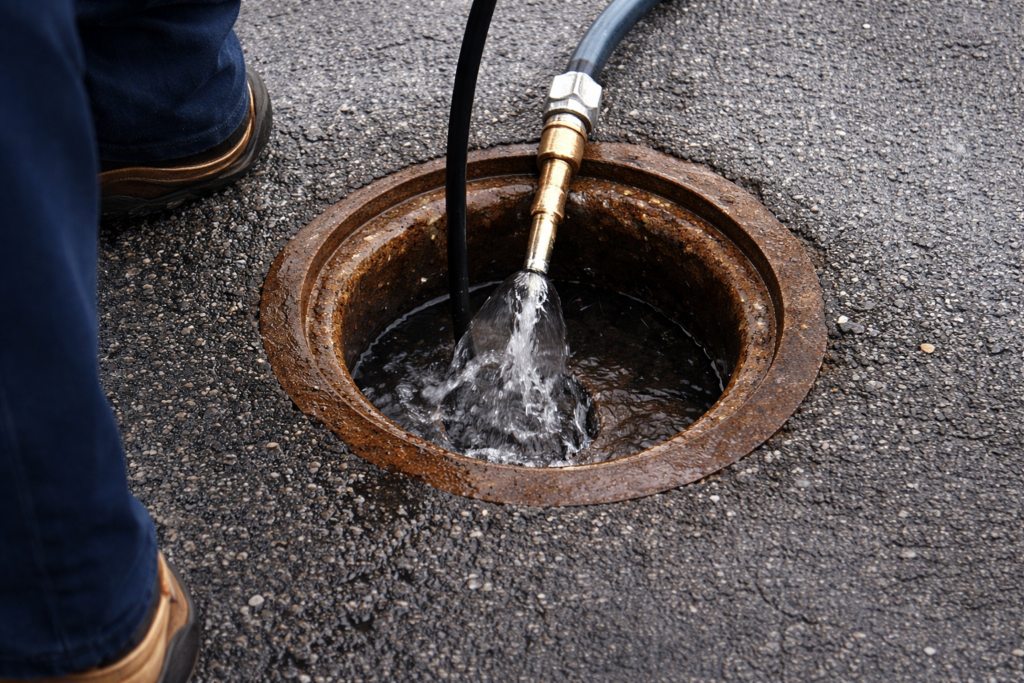
A Sewer Line Inspection Catches Cracks and Pipe Damage Before Freezing Temperatures
Freeze and thaw cycles are brutal on buried sewer pipes across northeast Kansas. When the ground freezes, soil expands and presses against the pipe from every direction. When it thaws, the soil settles and shifts, pulling joints apart and stressing weak spots. A pipe with a small crack in October can become a fully separated line by March. Cast iron pipes corrode from the inside out, and clay pipes become brittle with age. Even modern PVC lines can fail if they were improperly bedded during installation. A camera inspection documents every crack, belly, offset joint, and corroded section before winter makes them worse. Knowing the exact condition of your line lets you plan repairs instead of reacting to failures.
A belly is a sagging section of pipe where wastewater pools instead of flowing through. Bellies collect grease, paper, and solids until they form a complete blockage. Cold weather makes bellies worse because standing water in a shallow line can partially freeze and restrict flow even further. Offset joints happen when soil movement pushes two pipe sections out of alignment, creating a ledge that snags debris. These defects are invisible from the surface; your yard can look perfect while the pipe below is failing. Only a camera inspection reveals these problems with certainty. The technician records the footage and marks the exact depth and location of each defect. That documentation becomes your roadmap for targeted repairs instead of guesswork.
Finding damage in the fall also protects your home’s interior from sewage backups. A compromised line that handles normal summer flow may fail under holiday season demand. When a sewer line fails in winter, wastewater has nowhere to go except back into your home through the lowest drain. Basement flooding with raw sewage creates health hazards, destroys flooring, and requires professional remediation. Insurance claims for sewer backups are often denied without a separate rider on your policy. Repairing a documented crack in November costs a fraction of cleaning up a February backup. If the inspection finds damage, prompt repair keeps the problem outside where it belongs. Found a problem in your line? Click here for our sewer line repair service.
A Sewer Line Inspection Clears the Way Before Holiday Guests Arrive
The stretch from Thanksgiving through New Year’s Day is the busiest time of year for residential plumbing systems. Extra guests mean more showers, more laundry, more dishwashing, and far more flushes than your system handles on a normal week. Holiday cooking sends grease, fats, and food scraps down the kitchen drain in volumes the line rarely sees. A sewer line that is already partially blocked by roots or buildup cannot handle this surge. That is why plumbers see a spike in emergency backup calls every holiday season. A fall inspection confirms your line has full capacity before the demand arrives. You get peace of mind knowing your plumbing can handle a full house. Nobody wants to explain a sewage backup to overnight guests.
Partial blockages give warning signs that most homeowners dismiss until it is too late. Slow drains in multiple fixtures point to a main line problem rather than a single clogged trap. Gurgling sounds from the toilet when the washing machine drains indicate air trapped by a partial obstruction. Sewage odors near floor drains or in the yard suggest wastewater is escaping the pipe. If you notice any of these symptoms in the fall, an inspection should move to the top of your list. The camera pinpoints the cause in under an hour in most cases. Guessing at the problem leads to repeated drain cleanings that never address the real issue. Diagnosis first, then the right repair; that order saves money every time.
Scheduling an inspection in early fall also means better availability and faster service. Plumbing companies book up quickly once the first cold snap hits and emergency calls flood in. October appointments are easier to get than December appointments, plain and simple. You can review the camera footage, get a written estimate, and compare your options without pressure. If repairs are needed, they can be completed weeks before your first holiday gathering. Homeowners who wait until symptoms appear lose that flexibility entirely. An emergency backup on Christmas Eve means premium rates and limited options. A calm October inspection means normal rates and full control over the timeline.
What Happens During a Professional Sewer Line Camera Inspection
Many homeowners have never seen a sewer camera inspection and do not know what to expect. The process is fast, clean, and completely noninvasive; no digging is required to see the entire line. A trained technician locates your sewer cleanout, which is usually a capped pipe near the foundation or in the yard. The camera is a small waterproof lens mounted on a flexible rod with bright LED lights. As it travels through the pipe, the video feed displays on a monitor in real time. The equipment also transmits a locating signal so the technician can mark the exact position and depth of any problem from above ground. Most residential inspections take thirty to sixty minutes from start to finish. You can watch the footage yourself and ask questions as the camera moves through the line.
The Sewer Line Camera Inspection Process Step by Step
The inspection begins with locating and opening the sewer cleanout access point. Homes without an accessible cleanout may require the technician to pull a toilet or access the line through a roof vent. Once access is established, the technician inserts the camera head and begins feeding it through the pipe. The rod is marked with distance measurements so every defect can be logged by its exact footage from the entry point. Bright LED lighting illuminates the pipe interior even when water is present. The camera head is articulated, which allows the technician to look directly at joints, connections, and suspect areas. High resolution video captures details as small as hairline cracks. The entire run from your house to the city main or septic tank gets documented.
As the camera travels, the technician narrates what appears on screen and flags anything abnormal. A healthy pipe shows smooth walls, tight joints, and steady downward flow toward the main. Problem areas show up clearly: roots look like stringy masses, cracks appear as dark lines, and bellies show standing water that submerges the lens. The locating transmitter in the camera head lets the technician walk the yard above with a receiver and mark the exact spot of each defect. Depth readings tell the repair crew how far down they would need to dig. This precision is what makes camera inspections so valuable; repairs target one specific spot instead of exposing the whole line. Guess based digging tears up entire yards. Camera guided repairs disturb a few square feet.
After the inspection, you receive the recorded footage and a written report of findings. The report lists each defect, its location, its depth, and its severity. A good technician explains what needs immediate attention and what can simply be monitored over time. Not every defect requires a repair today; minor scale buildup or slight joint offsets may just need a follow up inspection in a year or two. Honest diagnostics matter here because some companies use inspections as a sales tool for unnecessary work. You should always get the actual footage, not just a verbal summary. Keep the recording with your home records; it establishes a baseline for future comparisons. Buyers and insurance companies also value documented pipe condition.
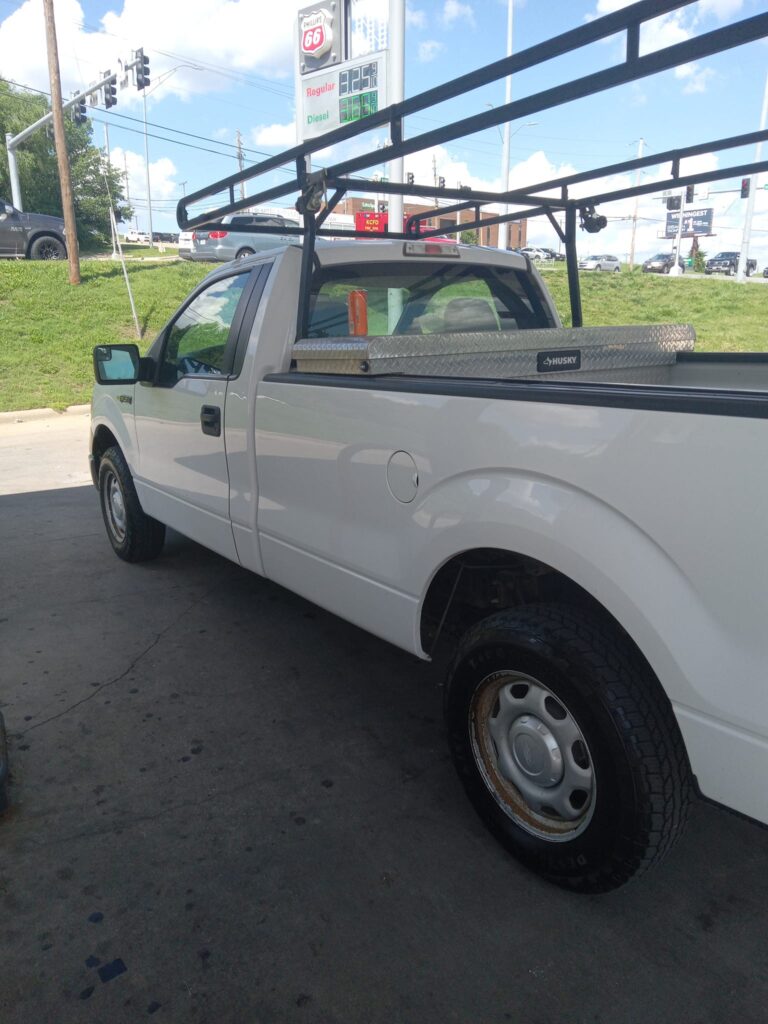
Common Problems a Sewer Line Inspection Reveals
Root intrusion tops the list of findings in established Kansas neighborhoods. Roots enter through joints and cracks, then branch out inside the pipe where moisture and nutrients are constant. Grease buildup is the second most common discovery, especially in lines serving busy kitchens. Grease coats the pipe walls in layers that narrow the opening year after year. Scale and corrosion appear frequently in cast iron lines, where rust creates a rough interior that snags debris. Channeling is another cast iron problem where the bottom of the pipe rusts away entirely. Foreign objects also turn up more often than you would expect; wipes, toys, and hygiene products cause countless blockages. Each of these problems has a specific fix, and the camera identifies which one you are dealing with.
Structural defects are the more serious category of findings. Cracked pipes allow wastewater to leak into the surrounding soil and let groundwater infiltrate the line. Offset joints create ledges that catch solids and start recurring clogs. Bellies hold standing water that breeds odors and accumulates sludge. Collapsed sections stop flow entirely and always require excavation or trenchless replacement. Older homes in Topeka, Lawrence, and Ottawa often have Orangeburg pipe, a tar paper product from the mid 1900s that deforms and fails with age. A camera inspection is the only way to confirm Orangeburg without digging. If your home was built between 1945 and 1972, identifying your pipe material should be a priority.
The inspection can also reveal problems that originate beyond your property. Municipal main connections sometimes fail at the tap point where your lateral joins the city line. Neighboring construction can shift soil and damage your lateral without your knowledge. Heavy vehicle traffic over a shallow line crushes pipes over time. In rural areas around Lecompton, Perry, and Oskaloosa, septic connections and older field lines present their own failure points. Knowing the exact cause and location determines who is responsible for the repair. Some cities share repair costs for laterals under public streets. Documentation from a camera inspection supports those claims and protects you financially.
What to Do After Your Sewer Line Inspection Results
Clean results mean you can relax and enjoy winter without worrying about your main drain. Even so, keep the footage and schedule your next inspection in two to three years as routine maintenance. Homes with large trees nearby or pipes over forty years old benefit from annual inspections. Preventative maintenance on a sewer line is remarkably cheap compared to any repair. An inspection typically costs a few hundred dollars; excavated repairs start in the thousands. Think of the inspection like an annual physical for the most expensive pipe you own. Consistent records also add real value when you sell your home. Buyers increasingly request sewer scope results before closing.
Minor findings usually call for cleaning rather than repair. Hydro jetting removes grease, scale, roots, and sludge with pressurized water and restores the pipe to near full capacity. Cabling or augering cuts through root masses when jetting is not suitable. After cleaning, a second camera pass confirms the line is clear and checks for damage the blockage was hiding. This verification step matters because roots and buildup often conceal cracks underneath. Cleaning in the fall means your line enters winter at maximum capacity. Enzyme treatments and slow release root inhibitors can extend the time between cleanings. Your technician can recommend a maintenance interval based on what the camera showed.
Major findings require a repair decision, and fall gives you time to make it wisely. Spot repairs replace one damaged section through a small excavation. Trenchless methods like pipe lining and pipe bursting rehabilitate long runs with minimal digging. Full replacement becomes the right call when a line has multiple failures or is made of failed material like Orangeburg. Get the camera footage, get a written estimate, and understand exactly what each option covers. Reputable contractors explain the tradeoffs without pressure. Completing the work before the ground freezes avoids winter surcharges and weather delays. A repair finished in November protects your home through the harshest months and for decades beyond.
Why You Need to Schedule Your Fall Sewer Line Inspection Now
The window for easy sewer work closes fast in Kansas. Once the ground freezes, excavation costs rise, schedules tighten, and emergency calls take priority over planned maintenance. A fall inspection costs little, takes under an hour, and tells you the true condition of the most important pipe on your property. Problems found now get fixed on your terms; problems found in January get fixed on winter’s terms. Every year, homeowners who skipped a simple inspection end up paying for emergency backups, ruined basements, and frozen ground excavation. Do not join them this year.
The Cost Savings of an Early Fall Sewer Line Inspection
A sewer camera inspection is one of the highest value services in all of home maintenance. For a modest fee, you get a complete visual record of a pipe that would cost thousands to access any other way. Compare that to the cost of a single sewage backup: remediation, flooring replacement, and repairs regularly exceed five thousand dollars. Emergency plumbing rates run higher than scheduled service rates, and winter excavation adds frozen ground surcharges on top. The math strongly favors inspecting first. Prevention is always the cheaper path with buried pipes.
Early detection also expands your repair options, and more options mean lower prices. A small crack caught in the fall might qualify for an inexpensive spot repair or a trenchless liner. That same crack ignored through winter can propagate until the pipe collapses and forces full replacement. Contractors also have more scheduling flexibility in fall, which often translates into better pricing. Financing spreads the cost of larger repairs into manageable payments. Acting early keeps every one of these advantages on your side.
There is also the hidden cost of water damage and property loss to consider. Sewage backups destroy stored belongings, finished basements, and mechanical equipment like water heaters and furnaces. Insurance frequently excludes sewer backups without a specific endorsement, leaving homeowners to pay out of pocket. Even covered claims raise premiums for years afterward. A fall inspection is the cheapest insurance policy your sewer line will ever have. Spend a little now or risk a lot later; the choice is straightforward.
How a Sewer Line Inspection Prevents Winter Plumbing Emergencies
Winter is the worst possible time for a sewer line failure. Frozen soil slows excavation to a crawl and drives labor costs up sharply. Snow cover hides cleanouts, yard markers, and access points that crews need to reach. Holiday demand pushes plumbing schedules to their limits, so emergency response times stretch longer. Meanwhile, raw sewage backing into your basement does not wait for anyone. A fall inspection removes the failure risk before winter conditions multiply the consequences.
Cold weather itself accelerates existing sewer problems. Partial blockages freeze more readily because slow moving water loses heat in shallow lines. Bellies full of standing water can develop ice restrictions that choke flow completely. Soil expansion from frost pushes on cracked pipes and widens every weak point. A line that limped through summer often fails outright in its first hard freeze. Inspecting and correcting these weaknesses in the fall breaks that chain of events.
Emergency prevention also protects your family’s health and daily routine. A home without a working sewer line is effectively unlivable; no flushing, no showers, no laundry. Sewage exposure carries bacteria and pathogens that require professional cleanup. Families with guests, children, or elderly members feel these disruptions the hardest. A one hour inspection in October keeps your household running smoothly all winter. That trade is as easy as home maintenance decisions get.
Why Choose DC Electrical HVAC Plumbing for Your Sewer Line Inspection
DC Electrical HVAC Plumbing, Inc is a local company based in Lecompton, Kansas, serving Lawrence, Topeka, and the surrounding communities. Our technicians are OSHA 80 certified and EPA certified, and we bring that same professional standard to every sewer inspection. We provide honest diagnostics with no sales pressure; you see the actual camera footage and decide for yourself. We offer free estimates on service and installation, so understanding your options costs you nothing. Our team lives and works in the same communities we serve. When you call us, you get neighbors, not a call center.
We handle the entire job from inspection to repair under one roof. Our services include sewer line inspection, sewer line repair, sewer line installation, hydro jetting, and leak detection. That means no handoffs between companies and no conflicting diagnoses. If the camera finds a problem, the same team that documented it can fix it. Financing is available for plumbing, HVAC, and electrical services, which makes larger repairs manageable. One call covers everything your sewer line needs.
Emergencies do not follow business hours, and neither do we. Our 24/7 emergency service is available every day of the year for the communities we serve. We are dedicated to always providing stellar service on every visit, from a routine fall inspection to a midnight backup call. Homeowners across Lawrence, Eudora, Tonganoxie, Basehor, and beyond trust us because we earn it on every job. Call DC Electrical HVAC Plumbing at (785) 596-3963 or email info@justcalldc.com to schedule your fall sewer line inspection today. Beat the freeze and protect your home before winter arrives.