
How to Know When You Need an Electrical Panel Upgrade in Lawrence, KS
Your electrical panel is the backbone of your entire home’s electrical system. It receives power from the utility, divides it into individual circuits, and distributes it to every outlet, appliance, light fixture, and device in your home. When it’s working properly, you never think about it. It sits quietly in the utility room, basement, or garage doing its job without any drama. But when it starts to show signs of age, inadequacy, or failure, the consequences range from daily inconveniences to genuinely dangerous conditions that put your home and family at risk.
For homeowners in Lawrence, KS, the question of whether an electrical panel upgrade is needed is one that comes up more often than you might expect. Lawrence has a rich mix of housing stock; from historic homes near the University of Kansas campus and downtown to newer builds on the outskirts of town. Older homes in particular often have electrical panels that were designed for a fraction of the electrical demand that modern households place on them. Understanding what your panel does, how to recognize when it’s falling short, and when it’s time to call a licensed electrician is knowledge every homeowner here should have.
What Your Electrical Panel Actually Does
The electrical panel, also called the breaker box or load center, is where the electricity entering your home gets organized and controlled. Inside the panel are circuit breakers; switches that are designed to trip, or shut off automatically, when a circuit draws more current than it’s rated to handle. This tripping function is a safety mechanism. Without it, overloaded wires would overheat, potentially causing fires inside your walls where you can’t see or respond to them quickly.
Each circuit breaker in your panel corresponds to a specific circuit running through your home. Some circuits serve a single high-demand appliance like an electric dryer, air conditioner, or oven. Others serve groups of outlets in different rooms. When a breaker trips, it’s telling you that something on that circuit drew too much power at once. Resetting it occasionally is normal, but if it happens repeatedly, the panel is communicating something important about the limits of your current system.
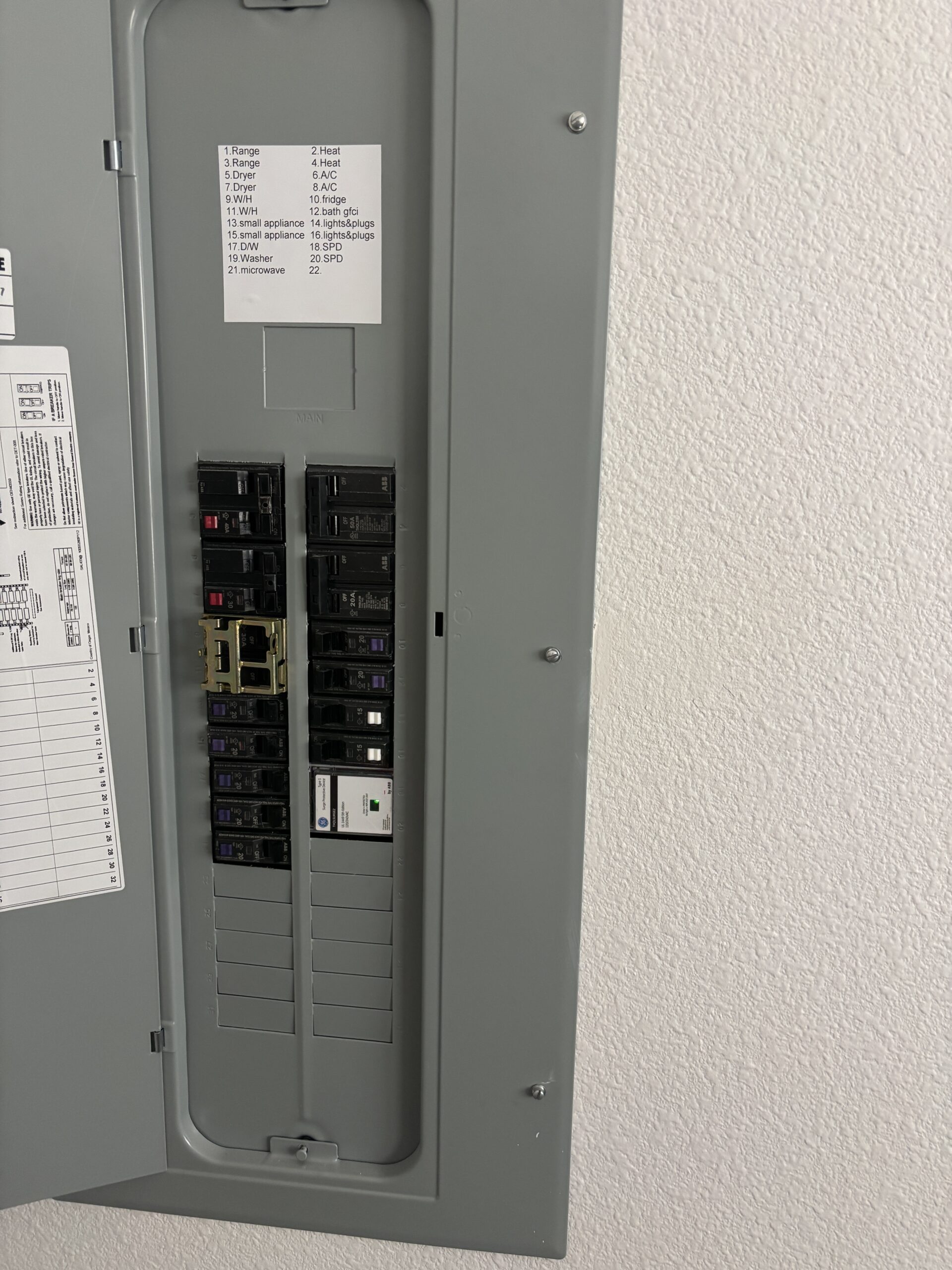
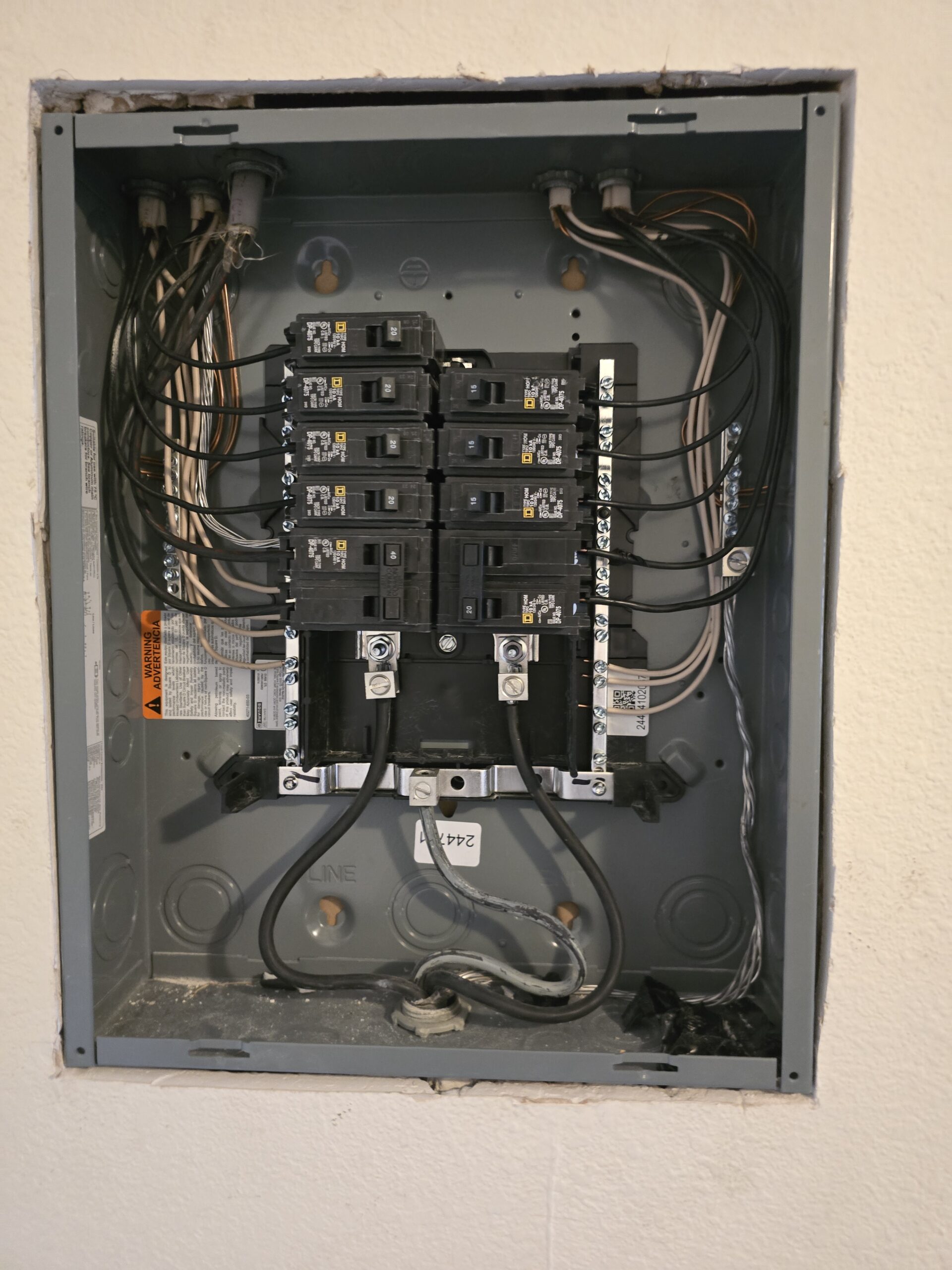
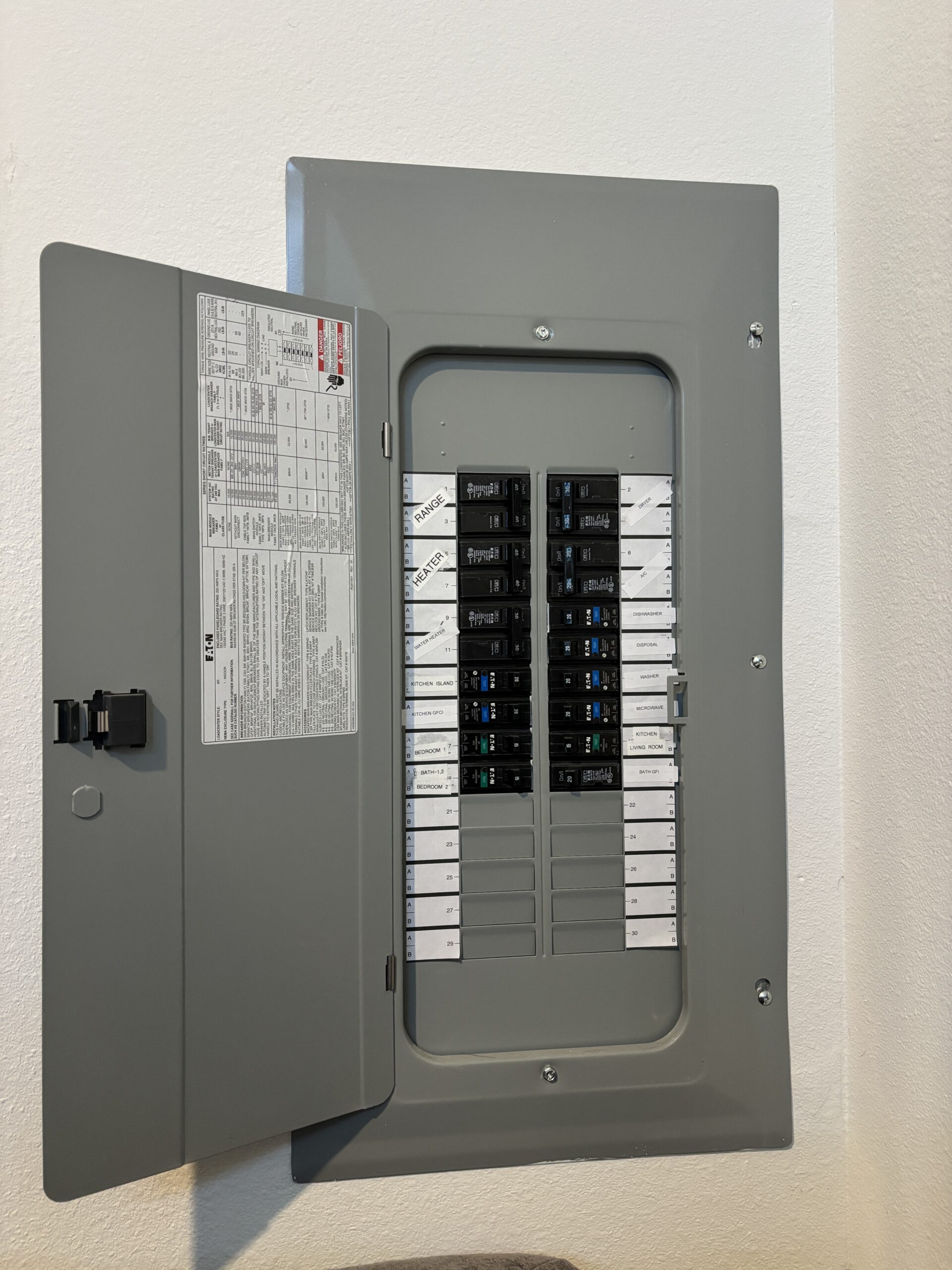
The overall capacity of your panel is measured in amperes, commonly called amps. Older homes often have panels rated at 60 or 100 amps, which was perfectly adequate for the electrical loads of the era in which they were built. Modern homes are typically built with 200-amp service to accommodate the significantly greater number and variety of electrical devices that households now rely on. The gap between what an aging panel was designed to handle and what today’s lifestyle demands of it is often the root cause of many of the problems homeowners experience.
Breakers That Trip Too Often
One of the most telling signs that your electrical panel may need an upgrade is circuit breakers that trip frequently. If you find yourself walking to the panel to reset a breaker on a regular basis; whether it’s in the kitchen, the home office, the living room, or anywhere else, that pattern is worth paying attention to. A single isolated trip is usually nothing to worry about. A recurring pattern of trips on the same circuit, or trips happening across multiple circuits, points to a panel that’s being pushed beyond its design limits.
In a modern home, it’s not unusual to have a kitchen where a microwave, coffee maker, toaster, and refrigerator are all running at the same time. A living room might have a large television, a gaming console, a sound system, and several devices charging simultaneously. Home offices have computers, monitors, printers, and other equipment drawing continuous power. When those loads are being fed by circuits and a panel that were designed for a simpler era of electrical use, tripping becomes a symptom of a structural mismatch rather than a user error.
It’s important to understand the difference between a nuisance trip and a safety trip. In both cases, the breaker is doing exactly what it was designed to do, but the underlying causes are different. A nuisance trip is caused by a temporary overload that could be resolved by redistributing loads across circuits. A more serious pattern of trips can indicate that the panel itself is aging, that breakers are wearing out and becoming overly sensitive, or that the overall capacity of the system genuinely can’t support the demand being placed on it. A licensed electrician can assess which situation applies to your home.
Flickering Lights and Unexplained Power Fluctuations
Lights that flicker, dim, or fluctuate in brightness when appliances turn on or off are another symptom of an electrical panel that may be struggling. Some degree of minor dimming when a large appliance like an air conditioner kicks on is considered normal, motors draw a surge of current at startup that can cause a brief, momentary dip. But if lights are flickering regularly, flickering across multiple rooms, or dimming noticeably and staying dim, something more significant may be going on.
Flickering can indicate loose connections inside the panel, failing breakers, or a panel that simply doesn’t have enough capacity to supply stable voltage to all circuits simultaneously. In Lawrence’s climate, where summers are hot and humid and air conditioning systems work hard for months at a time, the electrical demand on older panels can be particularly intense. An overworked panel in summer conditions is a combination that can accelerate wear and make existing weaknesses in the system more apparent.
Voltage fluctuations can also be harmful to sensitive electronics and appliances. Computers, televisions, smart home devices, and kitchen appliances with electronic controls are all vulnerable to damage from irregular power supply. If you’ve experienced unexplained failures in electronics or appliances that seem to be in otherwise good condition, unstable power from an aging panel may be the cause. That’s a cost that often goes unnoticed but adds up quietly over time.
Your Home Has a Fuse Box Instead of a Breaker Panel
If your home still has a fuse box rather than a modern circuit breaker panel, upgrading is not just recommended, it’s urgent. Fuse boxes were the standard in homes built before the 1960s, and while they functioned adequately for the electrical demands of that era, they present serious safety and practical problems in a modern context. Lawrence has a significant number of older homes, particularly in the neighborhoods closest to downtown and the university, where fuse boxes are still in service.
The fundamental problem with fuse boxes is that fuses are designed to be one-time-use safety devices. When a fuse blows due to an overload, it must be replaced. Over time, homeowners frustrated by blown fuses sometimes replace them with higher-rated fuses than the wiring is designed to handle. This bypasses the safety mechanism entirely, allowing wires to carry more current than they’re rated for without any interruption. That condition is a known fire hazard and is one of the primary reasons insurance companies often refuse to cover homes with fuse boxes or charge significantly higher premiums for them.
Beyond safety, fuse boxes simply can’t be expanded to meet modern electrical needs. There’s no practical way to add circuits for a home office, an EV charger, updated kitchen appliances, or additional HVAC equipment. Replacing a fuse box with a modern 200-amp breaker panel isn’t just an upgrade; it’s a fundamental improvement to the safety and functionality of the home.
You’re Adding Major Appliances or Renovating Your Home
Home improvement projects and new appliance installations are a very common trigger for discovering that an electrical panel upgrade is necessary. If you’re planning to add a hot tub, install a home EV charger, upgrade to a modern HVAC system, finish a basement, add a home addition, or outfit a kitchen with new high-capacity appliances, each of those projects adds electrical demand that your existing panel may not be able to accommodate.
EV chargers in particular have become an increasingly common driver of panel upgrades. A Level 2 home charger, which is the standard for overnight residential charging, typically requires a dedicated 240-volt, 50-amp circuit. If your panel is already near capacity or is undersized, adding that circuit isn’t possible without upgrading the panel first. As more Lawrence homeowners make the transition to electric vehicles, electrical panel upgrades are becoming a routine part of the EV ownership experience.

Home additions and renovations that add livable square footage also add circuits. New bedrooms, bathrooms, home offices, and entertainment spaces all need dedicated electrical service. Contractors working on permitted renovations in Lawrence will be required to ensure that the electrical system meets current code, and that often means evaluating whether the existing panel has the capacity to support the new work. Discovering mid-project that the panel needs to be upgraded is a scenario that can be avoided entirely with an upfront assessment before the work begins.
Your Panel Is Visibly Aged or Has a Known Problem Brand
The physical condition and age of your electrical panel are meaningful factors in whether an upgrade is warranted. Panels that are 25 to 40 or more years old may be technically functional but are operating well past the era for which their components were designed. Breakers wear out over time, connections can corrode or loosen, and the overall integrity of the panel degrades. An old panel that appears to be working fine may still be a liability that a professional inspection would reveal.
There are also specific brands of electrical panels that have been identified as defective and are widely considered fire hazards by electricians and insurance professionals. Federal Pacific Electric panels, which feature Stab-Lok breakers, are one of the most well-documented examples. These panels were installed in millions of American homes from the 1950s through the 1980s and have been shown to fail to trip under overload conditions, the exact failure mode that allows electrical fires to start. Zinsco panels, another brand from the same era, have similar documented problems. If your home has either of these panel types, replacement should be treated as a priority regardless of whether you’re experiencing obvious symptoms.
Visible signs of trouble inside a panel, such as scorch marks, a burning smell, corrosion on breakers or bus bars, or breakers that feel warm to the touch, are serious warning signs that should prompt an immediate call to a licensed electrician. These are not conditions to monitor and revisit later; they indicate that the panel may already be in a failure mode that carries real risk.
The Impact on Home Insurance and Resale Value
Many homeowners don’t realize that their electrical panel has a direct relationship to their homeowner’s insurance coverage and their home’s marketability. Insurance companies assess risk when they underwrite a policy, and an outdated or defective electrical panel represents a significant fire risk that many insurers are unwilling to cover at standard rates, or at all. If you have a fuse box, a Federal Pacific or Zinsco panel, or a panel that’s clearly undersized for the home, you may find that obtaining or renewing homeowner’s insurance becomes complicated or expensive.
When it comes time to sell your home, a dated electrical panel can become a sticking point in negotiations. Buyers and their home inspectors will flag an undersized or aging panel, and lenders may require the issue to be resolved before approving a mortgage. What might seem like a deferred problem becomes a last-minute expense under the pressure of a real estate transaction, often at a less convenient time and at a higher cost than if it had been addressed proactively.
Upgrading your electrical panel adds tangible value to your home by removing a known liability, improving safety, and giving buyers confidence that the electrical system is capable of supporting modern living. In a competitive real estate market like Lawrence, having a home with a fully updated electrical system is a genuine selling point rather than just a box to check.
Knowing when your electrical panel needs to be upgraded isn’t always obvious, but the signs are there if you know what to look for. Frequent breaker trips, flickering lights, an aging fuse box, visible wear or damage inside the panel, difficulty supporting new appliances, and complications with insurance are all signals that your current system may no longer be adequate for your home and your lifestyle. Ignoring those signals doesn’t make them go away; it simply allows a manageable situation to develop into a costly or dangerous one.
At DC Electrical HVAC Plumbing Inc, we understand the electrical needs of Lawrence, KS homeowners, whether you’re in a historic older home that hasn’t been updated in decades or a newer property that’s grown beyond its original electrical design. Our licensed electricians can assess your current panel, explain your options clearly, and perform any upgrades needed to keep your home safe, functional, and fully capable of meeting modern demands. If any of the signs described here sound familiar, don’t wait; give us a call and let’s make sure your home’s electrical system is everything it should be.