
Signs Your Home Needs Repiping Before Winter Arrives
Winter is hard on residential plumbing, and old pipes take the worst of it. Kansas homes deal with hard freezes, temperature swings, and frozen ground that puts stress on every water line in the house. Pipes that limp through summer often burst when the first cold snap hits. Repiping replaces worn out supply lines before they fail, and fall is the smartest time to schedule the work. Waiting until January means dealing with frozen ground, emergency rates, and water damage on top of the pipe replacement itself. Homeowners who know the warning signs can plan the project on their own schedule instead of reacting to a flood. This guide covers the signs your home needs repiping, why winter makes pipe problems worse, and how to get ahead of the season. If your pipes are showing their age, now is the time to act.
Warning Signs Your Home Needs Repiping
Pipes rarely fail without warning; the signals just get ignored until water is pouring through the ceiling. Discolored water, weak pressure, and repeat leaks are the three most common signs that a repipe is coming. Each one points to corrosion or deterioration inside the pipe walls where you cannot see it. One symptom might mean a single bad section. Two or three symptoms together usually mean the whole system is wearing out at the same rate. Homes built before the 1980s with galvanized steel or polybutylene piping are at the highest risk. Pay attention to these signs in fall, because they get worse fast once temperatures drop. Need a professional opinion on your pipes? Click here for our repiping service.
Discolored Water Is a Sign Your Home Needs Repiping
Brown, yellow, or rusty water coming from your faucets is one of the clearest signs your home needs repiping. Galvanized steel pipes corrode from the inside out, and that rust flakes into your water supply every time you open a tap. The discoloration is usually worst first thing in the morning after water has been sitting in the pipes overnight. If the color clears after running the water for a minute, the corrosion is likely inside your home rather than the city main. That distinction matters because it puts the repair responsibility on you, not the utility. Rust in your water also stains sinks, tubs, and laundry over time. It affects taste and can clog aerators and appliance valves. None of these problems fix themselves; corroded pipe only gets worse.
Corrosion is not just a cosmetic issue, it is a structural one. As rust builds up inside a galvanized pipe, the metal wall gets thinner while the interior opening gets smaller. Eventually the wall becomes so thin that normal water pressure splits it open. Cold weather accelerates this failure because metal contracts as temperatures fall. A pipe that held together at 70 degrees can crack at 20 degrees. This is why so many pipe bursts happen during the first hard freeze of the year. The corrosion did the damage over decades; winter just delivered the final blow. Discolored water in October is a warning about what happens in December.
Testing is the first step, and it is simple. Fill a clear glass from the cold tap in the morning and look at the color against white paper. Do the same with the hot tap, since water heaters can also produce rusty water when the tank fails. If only the hot side is discolored, the water heater may be the culprit instead of the pipes. If both sides show rust, your supply piping is corroding. A plumber can confirm the diagnosis by inspecting exposed pipe in the basement or crawl space and checking for surface rust, flaking, and mineral buildup at joints. Homes with widespread corrosion are candidates for full repiping with copper or PEX. Both materials resist corrosion and handle Kansas winters far better than old steel.
Low Water Pressure Means Your Home May Need Repiping
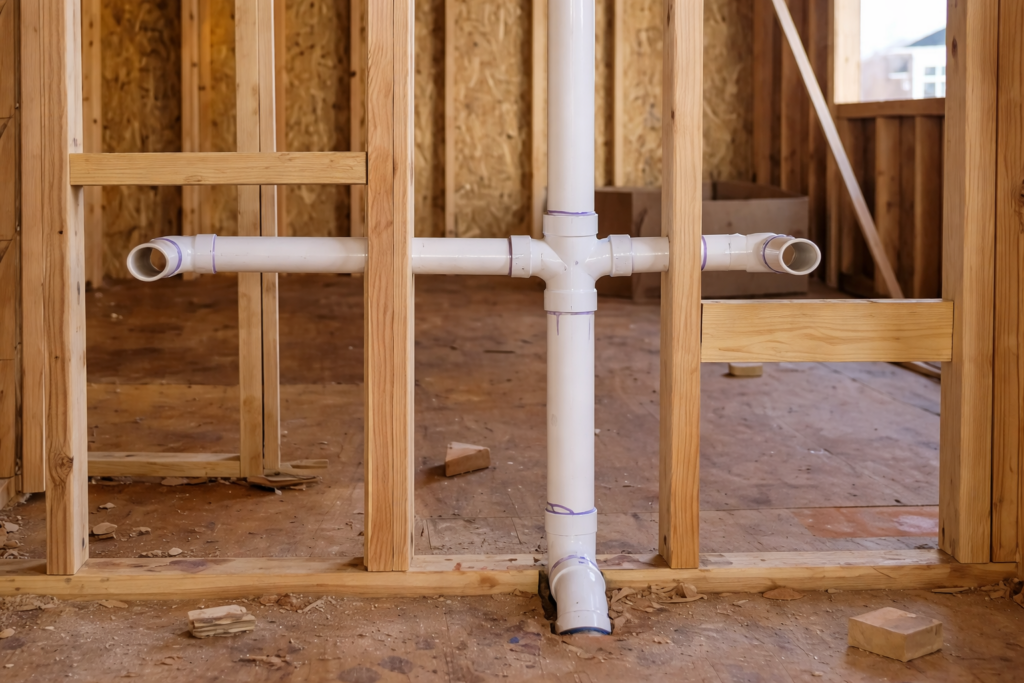
Weak water pressure throughout the house is another major sign your home needs repiping. Corrosion and mineral scale build up inside old pipes the way plaque builds up in arteries. A pipe that started with a full inside diameter can lose more than half of its flow capacity over 40 or 50 years. You notice it as a shower that dribbles, a washing machine that takes forever to fill, or faucets that slow to a trickle when two fixtures run at once. Pressure loss at a single fixture usually means a clogged aerator or a bad valve. Pressure loss everywhere means the problem lives inside your supply lines. That is a system problem, and system problems call for repiping rather than spot repairs. No amount of fixture cleaning restores flow through a pipe that is choked with rust.
Low pressure becomes a bigger liability in winter than most homeowners realize. Restricted pipes hold less moving water, and slow moving water freezes faster than water at full flow. Sections of pipe narrowed by scale are the first places ice forms during a cold night. Once ice starts, it expands and pressurizes the line until something gives. The weakest point is usually a corroded joint or a thin spot in the pipe wall. This is how a home goes from annoying low pressure in the fall to a burst pipe in the winter. The two problems are connected because the same corrosion causes both. Fixing the pressure problem before the freeze eliminates the burst risk at the same time.
Diagnosing pressure loss starts with a gauge test at an outdoor spigot or the water heater drain. Normal residential pressure runs between 40 and 80 psi. If the gauge reads normal but your fixtures still run weak, the restriction is inside your pipes rather than the supply from the street. A plumber can also check flow rate in gallons per minute at several fixtures to map where the restriction is worst. Homes with galvanized pipe almost always show restriction on this test after a few decades of service. Repiping with PEX or copper restores full flow to every fixture in the house. Most homeowners are surprised by how strong their showers feel after a repipe. Strong, steady flow also means your pipes are far less likely to freeze solid in January.
Frequent Leaks Show Your Home Needs Repiping
A pattern of repeat leaks is the most urgent sign your home needs repiping. One leak in 20 years is normal wear; three leaks in two years is a failing system. When pipes corrode, they do not corrode in just one spot. The same water, the same material, and the same age affect every foot of pipe in the house equally. Patching one pinhole leak simply shifts the pressure to the next weakest point. Many homeowners spend more on repeated repairs over a few years than a full repipe would have cost up front. Each repair also comes with drywall cuts, water cleanup, and time off work to meet the plumber. At some point, replacement stops being an option and becomes the only sensible math.
Hidden leaks are even more dangerous than the ones you can see. Pipes inside walls, under slabs, and in crawl spaces can leak for months before the damage shows. Warning signs include unexplained spikes in your water bill, the sound of running water when everything is off, warm spots on floors, and musty odors from mold growth. Water meter tests can confirm a hidden leak: shut off every fixture, then watch the meter for movement. Any movement means water is escaping somewhere in the system. Winter compounds hidden leaks because saturated insulation loses its ability to protect pipes from freezing. A small hidden leak in November can become a frozen, burst line by January. Think you have a leak you cannot find? Click here for our leak detection service.
Polybutylene pipe deserves special mention for Kansas homes built between 1978 and 1995. This gray plastic piping was installed in millions of homes and fails without warning as chlorine in the water degrades the material from the inside. Insurance companies know its reputation, and many will not write or renew policies on homes with polybutylene supply lines. Galvanized steel from earlier decades carries similar insurance concerns. If your home has either material, frequent leaks are not a possibility, they are a schedule. Repiping removes the liability, satisfies your insurer, and adds resale value. Buyers and home inspectors flag old piping immediately during a sale. Replacing it before winter protects your home now and your equity later.
Why Winter Makes Repiping Problems Worse
Cold weather turns marginal pipes into failed pipes, and the physics are unforgiving. Water expands about nine percent when it freezes, generating pressures that can exceed 2,000 psi inside a sealed line. No residential pipe material withstands that force at a weakened point. Kansas winters bring repeated freeze and thaw cycles that flex pipes over and over until fatigue cracks form. Frozen ground also complicates any excavation work needed for supply line replacement. Emergency plumbing rates run higher in winter because demand spikes with every cold front. Scheduling repiping in fall avoids all of it. The sections below explain exactly how winter attacks aging pipes.
Frozen Pipes Make Repiping an Emergency in Winter
Frozen pipes are the number one winter plumbing emergency, and old pipes freeze first. Corroded and scaled pipes carry less water at slower speeds, which gives ice a head start. Pipes in exterior walls, crawl spaces, attics, and unheated basements face the most exposure. When ice forms, it does not usually burst the pipe at the frozen spot. Instead, the ice blockage traps water between the freeze and a closed faucet, and pressure builds in that trapped section until the pipe splits. The split often happens at a corroded joint or thin wall, which is why old systems burst while newer ones survive the same cold night. A single burst supply line can release hundreds of gallons per hour into your home. Insurance industry data consistently ranks water damage among the most expensive homeowner claims.
The timing of a winter pipe failure makes everything harder. Bursts tend to happen during the coldest nights of the year, often during holiday weeks when plumbers are booked solid. Water must be shut off to the whole house, which means no showers, no laundry, and no working toilets until repairs are done. Frozen ground can delay any work involving buried supply lines from the meter to the house. Drying out a flooded home in freezing weather requires heaters and dehumidifiers running around the clock. Mold remediation may follow if moisture lingers in walls. Compare that scenario to a planned repipe in October, completed in a few days with water restored each evening. The difference in cost, stress, and disruption is enormous.
Repiping before winter removes the failure points that freezing exploits. Modern PEX piping is flexible and can expand slightly when water inside it freezes, which makes it far more forgiving than rigid steel or old copper. A professional repipe also gives the plumber the chance to reroute vulnerable lines out of exterior walls and unheated spaces. Proper insulation gets installed on any runs that must pass through cold zones. Shutoff valves get placed where you can actually reach them in an emergency. Every one of these upgrades reduces your freeze risk before the first cold front arrives. Homeowners with updated piping sleep through cold snaps that send their neighbors scrambling for buckets. That peace of mind is worth planning for.
Old Pipe Materials Fail Faster in Winter Without Repiping
Pipe material determines how a system handles cold, and the old materials handle it poorly. Galvanized steel, common in homes built before 1970, becomes brittle as corrosion thins its walls over 40 to 60 years of service. Steel also conducts heat away from water quickly, so galvanized lines in cold spaces freeze faster than plastic alternatives. Polybutylene becomes increasingly fragile as chlorine exposure degrades it, and cold temperatures make the brittle plastic even more prone to cracking. Even copper, an excellent material overall, develops pinhole leaks from decades of corrosive water and can split when frozen because it is rigid. Every material has a service life. When that life overlaps with a Kansas winter, failure risk multiplies. Knowing what is in your walls tells you how urgent your situation is.
Thermal cycling is the slow killer that most homeowners never consider. Pipes expand when hot water runs through them and contract when they cool, and winter widens that temperature swing dramatically. A pipe in an exterior wall might cycle between 40 degrees and 120 degrees several times a day. Over thousands of cycles, joints loosen, solder fatigues, and hairline cracks grow. Old materials with existing corrosion have far less tolerance for this movement than new pipe. This is why leaks so often appear in the weeks after the first cold snap even without a hard freeze. The temperature swing alone finished off connections that were already marginal. Fall repiping resets the clock with fresh material and new joints rated for decades of cycling.
Modern replacement materials solve these problems by design. PEX tubing flexes with temperature changes, resists corrosion completely, and installs with fewer joints because it bends around corners instead of requiring fittings at every turn. Fewer joints means fewer future leak points. Copper remains a premium choice with proven longevity, natural resistance to bacteria, and full recyclability. A qualified plumber will recommend the right material based on your water chemistry, home layout, and budget. Both options carry manufacturer warranties measured in decades, not years. Compare that to gambling another winter on 50 year old steel. Questions about pipe materials for your home? Click here for our piping service.
Winter Water Damage Costs More Without Timely Repiping
Water damage in winter costs more than the same damage in any other season, and the reasons stack up quickly. Cold weather slows evaporation, so soaked drywall, insulation, and flooring take longer to dry. Longer drying times raise the risk of mold, which triggers remediation costs on top of repairs. Restoration companies charge peak rates during winter storm events when demand surges. Opening walls to dry them means heating a home with compromised insulation through the coldest months. If a burst forces you out of the house, temporary lodging adds up fast. Insurance may cover sudden bursts, but many policies exclude damage from long term leaks or poorly maintained pipes. Deductibles and premium increases follow every claim. The financial case for preventing the failure is overwhelming.
The damage itself also tends to be worse in winter. A summer leak might get noticed within hours because people are home and moving through the house. A winter burst can happen while a family travels for the holidays, running unchecked for days. Water follows gravity through floor after floor, ruining ceilings, electrical systems, cabinetry, and personal belongings along the way. Hardwood floors cup and buckle within hours of saturation. Finished basements are frequently a total loss. Electronics, documents, and irreplaceable items rarely survive a flood from above. Insurance checks replace market value, not sentimental value. No payout undoes weeks of displacement and cleanup.
Fall repiping is the cheapest insurance a homeowner with aging pipes can buy. The project cost is fixed and known up front, unlike the open ended cost of a flood. Financing spreads the investment into manageable payments, which is easier to budget than a surprise five figure restoration bill. Many insurers offer premium discounts for homes with updated plumbing, which offsets part of the cost over time. A repiped home also appraises and sells better, since inspectors flag old supply lines in every transaction. Scheduling in September or October means comfortable working conditions and full contractor availability. Waiting until the pipes decide the timing for you erases every one of those advantages.
Why You Need Professional Repiping Before Winter
Repiping is a whole home project that demands licensed expertise, not a weekend patch job. A professional plumber maps your entire system, selects the right material, pulls the required permits, and completes the work to code. Doing it before winter means the crew works in mild weather, ground access is easy, and your family avoids the misery of an emergency shutdown in freezing temperatures. Most whole home repipes finish in two to five days with water restored each night. DC Electrical HVAC Plumbing serves Lawrence, Topeka, and surrounding Kansas communities with honest diagnostics and no sales pressure. Ready to protect your home before the cold arrives? Click here to schedule repiping with our team.
Professional Repiping Protects Your Home All Winter
Professional repiping delivers protection that piecemeal repairs never can. A licensed plumber evaluates every supply line in the home, not just the one that leaked last. Vulnerable runs get rerouted away from exterior walls and unheated spaces. New shutoff valves get installed at key fixtures so future problems can be isolated in seconds. Insulation gets added where pipes must cross cold zones. The result is a system engineered to survive Kansas winters instead of merely surviving until the next one.
Code compliance is a benefit homeowners often overlook. Plumbing codes exist because decades of failures taught the industry what works. Professional repipes are permitted and inspected, which documents the work for your insurance company and future buyers. Correct pipe sizing, proper support spacing, and approved connection methods all get verified. DIY or handyman piping frequently fails inspection during home sales and must be redone. Paying once for licensed work beats paying twice.
A professional repipe also improves daily life immediately. Water pressure returns to full strength at every fixture in the house. Rusty water and metallic taste disappear for good. Hot water reaches showers faster through properly sized lines. Noisy, banging pipes go quiet with correct securing and modern materials. These improvements start the day the job finishes and last for decades. Winter protection is the reason to act now; better water every day is the bonus.
Repiping Before Winter Saves Money on Repairs
The math on preventive repiping is straightforward. A planned repipe carries one predictable cost, scheduled on your terms. A winter pipe burst carries emergency service rates, water extraction, structural drying, drywall and flooring replacement, and possible mold remediation. Restoration industry figures put average burst pipe claims well into five figures. The repipe itself still has to happen after the flood, so the emergency route means paying for both. Prevention costs less than reaction in nearly every scenario.
Fall scheduling adds its own savings. Plumbing contractors have more open calendar slots before the winter emergency season begins. Ground excavation for buried supply lines is faster and cheaper before frost sets in. Material deliveries face fewer weather delays. Your household avoids water shutoffs during holiday gatherings. Every one of these factors trims cost and hassle from the project.
Financing makes the decision even easier for budget conscious homeowners. DC Electrical HVAC Plumbing offers financing for plumbing services, spreading the investment into predictable monthly payments. Free estimates mean you know the full cost before committing to anything. There are no surprise charges and no sales pressure during the evaluation. Compare a fixed monthly payment against the open ended cost of winter water damage. The smart money repipes in the fall.
Why Choose DC Electrical HVAC Plumbing for Repiping
DC Electrical HVAC Plumbing, Inc. is a full service plumbing, electrical, HVAC, and refrigeration company based in Lecompton, Kansas. We proudly serve Lawrence, Topeka, Eudora, De Soto, Tonganoxie, and the surrounding communities. Our team is OSHA 80 Certified and EPA Certified, and we bring that training to every repiping project. We provide honest diagnostics with no sales pressure, so you get a straight answer about your pipes. If a repair makes more sense than a repipe, we will tell you. Our reputation is built on stellar service, not upselling.
Every repiping estimate we provide is free. We walk you through the condition of your existing pipes, explain your material options, and give you a clear price before any work begins. Financing is available for plumbing, HVAC, and electrical services to keep your budget on track. We handle permits and code compliance so the project is documented properly. Our crews work efficiently to restore water service each evening during multi day projects. You stay in your home comfortably from start to finish.
Winter does not wait, and neither do burst pipes. Our 24/7 emergency service is always available, but our goal is to make sure you never need it. Schedule your repiping evaluation this fall and head into winter with confidence. Call DC Electrical HVAC Plumbing at (785) 596-3963 or email info@justcalldc.com. Visit us at 1856 E 600th Road, Lecompton, KS 66050. Just call DC and protect your home before the first freeze.