
Why Your Home Needs a Generator Before Storm Season
Storm season in northeast Kansas does not wait for a convenient week on your calendar. Late summer thunderstorms push across Douglas and Jefferson counties with straight line winds that drop limbs onto distribution lines, and the ice storms that arrive a few months later can leave entire neighborhoods dark for days at a stretch. When the grid drops, everything in your home that runs on electricity drops with it, including your furnace blower, your sump pump, your refrigerator, your well pump, and the medical equipment some families simply cannot live without for a weekend. A properly installed home generator turns a multi day outage into a minor inconvenience rather than a genuine emergency, and it does that work automatically while you sleep. The right time to plan for all of this is right now, well before the first warning siren sounds and long before every licensed electrician in the county is booked out three weeks deep. This guide covers how home generators actually work, how to size and fuel one for a Kansas home, and what a safe, code compliant installation truly requires.
What a Home Generator Does During Storm Season Power Outages
A home generator is not a gadget that keeps a few lamps glowing; it is a second source of power for your electrical system, and it needs to be wired into that system correctly to do any good at all. Standby units sit outside on a pad, monitor utility voltage continuously, and start on their own within seconds of an outage. Portable units are cheaper and far more limited, and they carry risks that send people to the hospital every single storm season. The difference between the two comes down to automation, capacity, and how the generator connects to your house. Understanding that difference before the sky turns green is what separates a comfortable week from a miserable one.
How a Standby Generator Protects Your Home During Storm Season
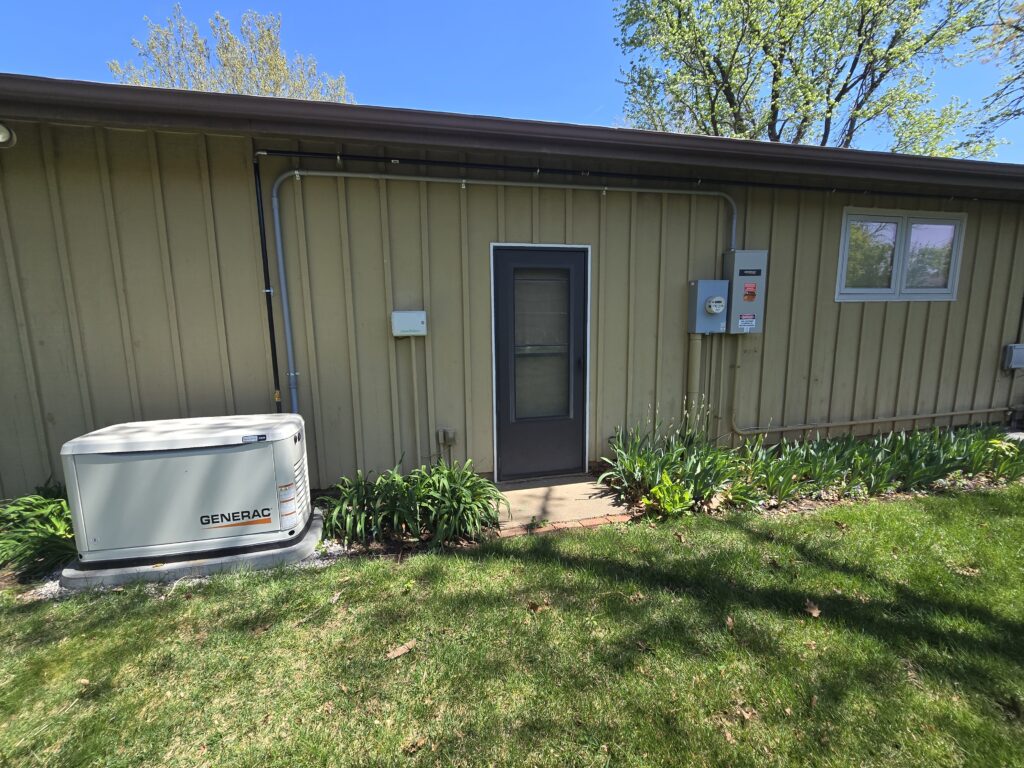
A standby generator is permanently mounted outside your home, usually on a composite or concrete pad, and it connects to a fuel supply and to your electrical panel through an automatic transfer switch. That transfer switch is the heart of the system, and it does two jobs at once. First, it senses the loss of utility voltage and signals the generator to crank, which normally happens within five to fifteen seconds depending on the model and the ambient temperature. Second, and far more importantly, it physically isolates your home from the utility grid before it lets generator power flow into your panel. That isolation keeps your generator from pushing voltage back onto the lines outside, which protects the utility crews working to restore your service. Once utility power returns and holds steady for a set period, the switch transfers your home back over and the generator cools down and shuts off on its own. You do not have to be home, awake, or even aware that any of it happened.
The capacity of a standby unit is what makes it genuinely useful during a long storm season outage. Air cooled residential units commonly range from about ten kilowatts up to twenty six kilowatts, and liquid cooled units go well beyond that for larger homes with heavy loads. A unit in the twenty two kilowatt range, paired with a load management module, can typically carry a full Kansas household including a central air conditioner, a furnace blower, a well pump, a refrigerator, a freezer, a sump pump, lighting, and standard receptacles. Load management modules matter more than most homeowners realize, because they temporarily shed a large load such as an electric water heater when the air conditioner compressor calls for power. That balancing act lets a moderately sized generator handle a home that would otherwise require a much larger and much more expensive machine. Soft start devices installed on air conditioning compressors reduce inrush current at startup and can meaningfully lower the generator size a home requires. An experienced electrician runs the numbers on your specific panel and your specific appliances rather than guessing from square footage alone.
Comfort during an outage is not a small consideration in this part of the state, and it is often a safety issue outright. A gas furnace still needs electricity to run its blower motor, its igniter, and its control board, so a January ice storm without power means a house that loses heat and pipes that begin to face freezing risk within hours. In late summer, a home without air conditioning becomes genuinely dangerous for infants, elderly residents, and anyone with a cardiac or respiratory condition. Refrigerated food follows a strict clock as well; a closed refrigerator holds a safe temperature for roughly four hours, and a full freezer holds for about forty eight hours, which means a three day outage empties both. Families running oxygen concentrators, CPAP machines, insulin refrigeration, or powered mobility equipment have no realistic workaround at all. A standby generator removes that entire category of worry from your storm planning. That is the practical case for installing one before the forecast turns bad rather than after.

What a Portable Generator Can and Cannot Do During Storm Season
Portable generators have a legitimate place, and plenty of Kansas homeowners keep one in the garage for exactly that reason. A typical portable unit produces somewhere between three thousand and eight thousand five hundred watts, which is enough to run a refrigerator, a sump pump, a few lights, a phone charger, and possibly a window air conditioner if you manage the loads carefully. They cost a fraction of what a standby system costs, and they can be moved to a job site or a campsite when the weather is fine. What they cannot do is start on their own, carry a whole house, or run indefinitely without someone hauling fuel to them every several hours. They also require the operator to make a series of decisions correctly, in the dark, in bad weather, which is precisely when people make mistakes. That gap between capability and convenience is the real limitation.
The safety issues with portable generators are serious and well documented, and they deserve plain language. Carbon monoxide from a portable generator kills people every storm season in this country, and it does so quickly, because the exhaust is odorless and the symptoms mimic simple fatigue. Never run a portable generator inside a garage, a basement, a crawlspace, a shed, or a breezeway, and never run one under an open window. Federal safety guidance calls for placing a portable unit at least twenty feet from the house with the exhaust directed away from doors, windows, and vents. Working carbon monoxide alarms on every level of the home are not optional when a portable generator is anywhere near the property. Extension cords running to the unit should be rated for outdoor use and sized for the load, because undersized cords overheat and start fires.
Backfeeding is the other portable generator hazard, and it is the one that endangers people outside your household. Backfeeding means plugging a generator into a wall receptacle or a dryer outlet to energize your home wiring, and it is both illegal and genuinely deadly. That practice pushes voltage backward through your panel and out through your service drop to the transformer, where it steps up to primary distribution voltage and can electrocute a lineman working to restore your neighborhood. It also bypasses your overcurrent protection and can ignite wiring inside your walls. The correct solution is a manual transfer switch or an interlock kit installed at your panel by a licensed electrician, which lets you power selected circuits safely and legally. That upgrade is affordable, it takes a few hours, and it turns a risky arrangement into a compliant one. Ready to power your home the safe way this season? Click here for our generator installation service.
Why Storm Season Outages Cost More Than Most Homeowners Expect
The sticker price of a generator is easy to see, and the cost of going without one is easy to overlook until the bill arrives. Start with the basement, because that is where the largest single loss usually happens. Heavy rain saturates the ground, the water table rises, and your sump pump runs continuously to keep the pit from overflowing; when the power fails during that exact storm, the pump stops and the water does not. A flooded basement in a Kansas home routinely runs into thousands of dollars for water extraction, drywall replacement, flooring, and mold remediation, and homeowner policies often treat groundwater intrusion very differently than they treat a burst pipe. A generator that keeps the sump circuit energized pays for a meaningful share of itself in one avoided event. If your pump is aging or your pit fills faster than it used to, click here for our sump pump repair service and get it evaluated before the rain starts.
Food loss adds up faster than people estimate, and it happens twice in a bad season. A well stocked refrigerator and a chest freezer together commonly hold several hundred dollars of groceries, and food safety rules are not flexible about temperature. Once a refrigerator climbs above forty degrees for more than two hours, the contents are no longer safe, and a thawed freezer full of meat is a total loss rather than a partial one. Beyond the groceries themselves, there is the cost of eating out for three days, the cost of a hotel room when the house gets too cold or too hot to occupy, and the lost wages when someone has to stay home to manage the situation. Home businesses face an additional hit, since a dead internet connection and a dead workstation stop revenue cold.
There is also a category of damage that shows up after the lights come back on. Utility restoration frequently involves voltage fluctuations, and equipment that was mid cycle when the power dropped can take the brunt of it. Furnace control boards, air conditioning contactors, well pump controls, refrigerator compressors, and any device with a microprocessor are all vulnerable to surge damage during restoration. Replacing a single control board can run several hundred dollars, and a damaged compressor can run far more than that. Layering whole house surge protection on top of a generator system covers both halves of the problem, since the generator handles the outage and the surge protective device handles the return. Protecting the electronics in your home is worth the small additional investment; click here for our whole house surge protection service to learn how it works.
How to Prepare Your Home Generator Before Storm Season Arrives
Buying a generator is the beginning of the project, not the end of it. Sizing determines what the unit can actually carry, fuel supply determines how long it can carry it, and maintenance determines the odds that it starts at two in the morning when you need it. Each of those three decisions has real technical requirements behind it, and shortcuts in any one of them show up at the worst possible moment. Homeowners who handle all three deliberately end up with a system that performs exactly as promised for fifteen years or more. The work is not complicated, but it does need to happen before the weather turns rather than during the outage itself.
Sizing a Generator Correctly Before Storm Season
Proper sizing starts with a load calculation, not with a sales brochure. An electrician reviews your panel, identifies your service size, and lists every load you want backed up along with its running wattage and its starting wattage. Motor loads matter far more than resistive loads in this exercise, because a well pump, an air conditioning compressor, or a garage door opener can draw three to seven times its running current for the first fraction of a second. That inrush is what stalls an undersized generator and trips its main breaker just as the storm is peaking. Electric resistance loads such as ranges, dryers, and water heaters draw heavily but predictably, and they are usually the first candidates for load shedding. Once the electrician totals running load, adds the largest motor starting load, and applies a safety margin, the correct generator size becomes a number rather than a guess. That number is what belongs on the purchase order.
Kansas homes tend to have a specific load profile that shapes these calculations. Central air conditioning is essentially mandatory here from June through September, and a three ton to five ton condenser is a substantial starting load on its own. Homes outside city water service run a submersible well pump, which is another significant motor load that cannot be shed without losing running water entirely. Many rural properties also carry a septic lift pump, a shop with welding equipment, or livestock waterers that have to keep running in freezing weather. Homes on natural gas have an easier time of it, since the furnace and water heater need only modest electrical support, while all electric homes require a considerably larger machine or much more aggressive load management. Your electrician should ask about all of this before recommending a size.
Undersizing and oversizing both carry penalties, so the goal is an honest match rather than the biggest unit on the lot. A generator that is too small will nuisance trip, overheat, and eventually damage the motors it is trying to run, because sustained low voltage is hard on compressors and pumps. A generator that is far too large costs more upfront, consumes more fuel per hour, and can suffer from wet stacking in diesel applications when it runs at very light load for long periods. Right sizing keeps the unit operating in an efficient band where it runs cleanly and its fuel supply lasts. It also keeps the transfer switch, the conductors, and the overcurrent protection matched to the equipment, which is a code requirement rather than a preference. If your existing panel is already at capacity, the generator project is often the right time to address that too; click here for our electrical service upgrade service to see what is involved.
Fuel Planning for Your Generator Before Storm Season
Fuel choice drives runtime, and runtime is the entire point during a multi day outage. Natural gas is the most convenient option when a gas main serves your property, because the fuel supply is continuous and you never handle a container. The tradeoff is that natural gas has lower energy density than propane, so a given generator produces somewhat less output on natural gas than it does on propane, and manufacturers publish separate ratings for each. Gas piping also has to be sized for the generator’s demand in addition to your existing appliances, and undersized pipe causes pressure drop that makes the unit stumble under load. A licensed technician calculates the required pipe diameter based on total connected load and the distance from the meter. That calculation is not optional, and skipping it is one of the most common causes of a generator that runs fine at idle and fails under real load.
Propane is the standard answer for properties without a gas main, and it works very well when the tank is sized realistically. A five hundred gallon tank fills to roughly four hundred gallons of usable propane, and a large air cooled standby unit at half load consumes somewhere in the range of two to three gallons per hour. That math yields several days of continuous operation, which covers the great majority of storm outages in this region with room to spare. Propane stores indefinitely without degrading, which is a genuine advantage over gasoline. The practical caution is to keep the tank well above a quarter full through storm season, since delivery trucks cannot always reach rural roads immediately after an ice event. Scheduling a top off in early fall is cheap insurance.
Gasoline and diesel deserve their own warnings because they are the fuels most often stored improperly. Gasoline degrades in a matter of months, and ethanol blended fuel attracts moisture that corrodes carburetors and fuel lines, which is exactly why so many portable generators refuse to start after a year in the garage. Stabilizer helps, but rotating fuel every few months helps more, and running the unit dry before storage prevents varnish buildup in the carburetor bowl. Store gasoline only in approved containers, keep it away from any ignition source, and never store it inside the living space. Diesel resists degradation better but is vulnerable to microbial growth and to gelling in cold Kansas temperatures without a winter blend or an additive. Refueling any hot generator is a fire risk, so shut the unit down and let it cool before adding fuel. Planning fuel logistics in September is far easier than solving them by flashlight in January.
Generator Maintenance and Testing Before Storm Season
A standby generator that has not been exercised is a very expensive lawn ornament, and that is the single most common failure story we see. Nearly every modern standby unit includes a programmable exercise cycle that runs the engine automatically on a weekly or biweekly schedule for ten to twenty minutes. That cycle circulates oil, keeps seals pliable, charges the starting battery, and burns off condensation inside the engine and the exhaust. Confirm that the exercise schedule is enabled and that someone in the household actually hears it run, because a silent generator on a Tuesday morning is a warning sign. Battery failure is the leading cause of a no start condition, and a starting battery generally lasts about three years in this climate. Testing that battery before storm season costs almost nothing and prevents the most predictable failure of all.
Annual service on a standby unit follows the same logic as service on any other engine, and the manufacturer sets the intervals. That work typically includes an oil and filter change, an air filter inspection or replacement, spark plug service, a valve clearance check at longer intervals, coolant service on liquid cooled units, and a full load test with the transfer switch operating. The load test is the part homeowners skip and the part that matters most, because it proves the entire system works end to end rather than proving only that the engine turns over. Technicians also inspect the enclosure for rodent nests, which are extremely common in units that sit idle in rural Kansas, and check that the air intake and exhaust are clear. Wiring terminations get torqued to specification, since thermal cycling loosens connections over time. Documentation of that service protects your warranty as well.
The physical installation site needs a seasonal walk through too, and this takes about ten minutes. Keep vegetation, mulch, firewood, and stored items well clear of the enclosure, since these units rely on unobstructed airflow for cooling and manufacturers publish specific clearance requirements for the sides, the top, and the exhaust end. The generator also has to sit a specified distance from operable windows, doors, and fresh air intakes so exhaust cannot enter the home, and that distance comes from the manufacturer’s listing and the adopted code. Verify the pad has not settled or shifted and that water is draining away from the unit rather than pooling under it. In winter, clear snow and ice from the enclosure louvers and confirm the exhaust outlet is not drifted over. Check that carbon monoxide alarms inside the home still test good, because they protect against far more than generator exhaust. A few minutes of attention each season keeps the equipment ready.
Why You Need Professional Generator Installation Before Storm Season
Generator installation touches your electrical service, your fuel piping, your combustion venting, and your local permitting process all in a single project. Each of those systems has its own code requirements, and every one of them exists because someone was seriously hurt when the work was done casually. A licensed installer handles the load calculation, the transfer switch selection, the grounding and bonding, the gas piping, the pad, the permit, and the final inspection as one coordinated job. That coordination is what turns a pile of equipment into a system that works automatically and legally. Getting it scheduled ahead of storm season also means you are not competing with your entire neighborhood for the same appointment slot.
Why Professional Generator Installation Keeps Your Family Safe Before Storm Season
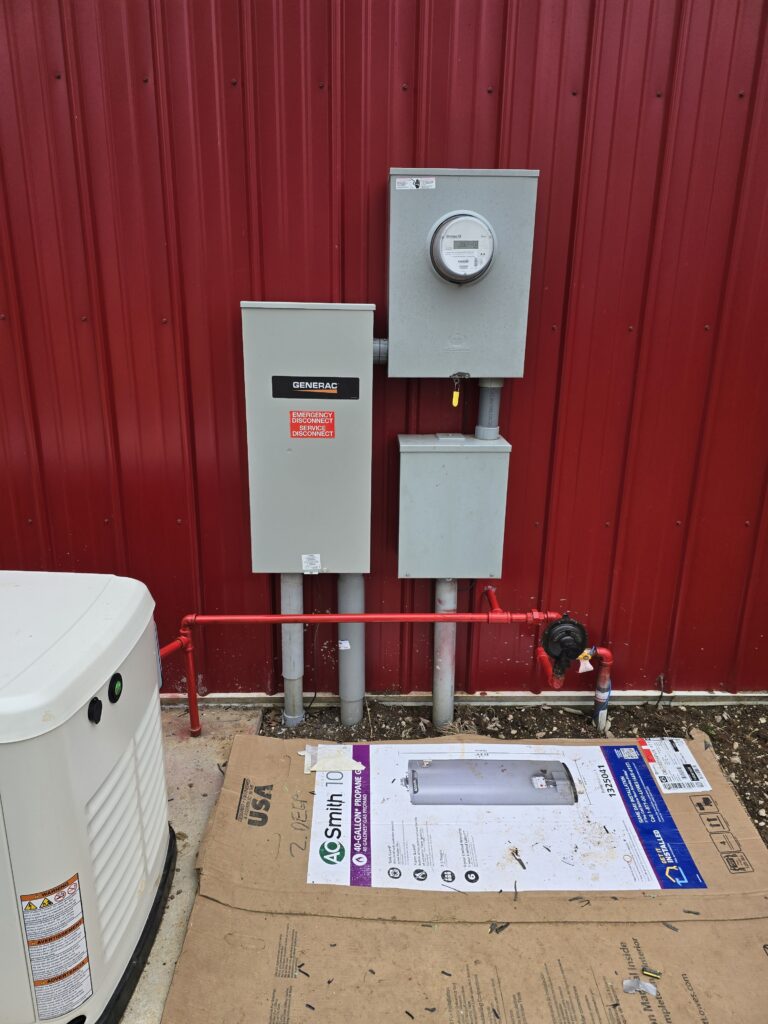
The transfer switch is the safety device that separates a legitimate installation from a dangerous improvisation. It guarantees that generator output and utility power can never energize the same conductors at the same time, which protects utility workers, your neighbors, and your own equipment. Selecting the right switch involves matching its rating to your service, deciding between a whole house switch and an essential circuits panel, and wiring the neutral correctly for the specific generator design. Neutral bonding errors are subtle, common in amateur installations, and capable of defeating the ground fault protection your home depends on. A licensed electrician gets that detail right the first time and documents it.
Grounding and bonding deserve the same scrutiny, and they are frequently misunderstood. The generator has to be integrated into your home’s grounding electrode system properly so that fault current has a reliable path back to the source and overcurrent devices open as designed. Conductor sizing between the generator and the transfer switch must account for distance, ambient temperature, and the overcurrent protection at each end. Outdoor conduit and fittings have to be rated for wet locations, and terminations need to be weathertight to survive Kansas humidity and ice. These are ordinary requirements for a professional and easy details to miss otherwise. Doing them correctly is what makes the system safe for the next twenty years rather than the next twenty days.
Fuel and exhaust work carries the highest immediate risk in the entire project. Gas piping has to be sized, supported, sealed with an approved compound, pressure tested, and fitted with a shutoff in an accessible location. Sediment traps, flexible connectors rated for the application, and correct regulator selection all affect how the generator performs under load. Exhaust placement has to comply with clearance requirements so carbon monoxide never reaches an occupied space or an air intake. A professional installation includes verification of all of it before the system is placed in service. That verification is the difference between confidence and hope.
Why Permits and Code Compliance Matter for Generator Installation Before Storm Season
Permits are not bureaucratic filler; they are the mechanism that puts a second set of trained eyes on work that can kill people. Jurisdictions across Douglas, Jefferson, Shawnee, and Johnson counties require electrical permits for generator installations, and gas work usually requires its own permit and inspection as well. The inspector verifies conductor sizing, overcurrent protection, transfer switch listing, grounding, clearances, and gas piping integrity against the adopted code. Passing that inspection is objective proof that your system was built correctly. It also creates a record that follows the property.
Insurance and resale both hinge on that documentation more than homeowners expect. Carriers can and do deny claims tied to unpermitted electrical or gas work, and a fire traced to an improvised generator connection is exactly the scenario they scrutinize. During a real estate transaction, an inspector who finds an unpermitted transfer switch or a suspect gas line will flag it, and the sale stalls until it is corrected by a licensed contractor. Correcting it after the fact almost always costs more than doing it properly at the outset. A permitted installation simply removes that friction from your future.
Code compliance also protects the investment itself. Manufacturer warranties on standby generators generally require installation by a qualified professional according to the installation manual, and they require documented maintenance at the specified intervals. An installation that ignores clearance requirements, uses undersized gas pipe, or skips the load calculation can void coverage on a unit that costs many thousands of dollars. Meeting code and meeting the manufacturer’s requirements usually amount to the same set of actions. Doing the work right protects both your family and your equipment at the same time.
Why Choose DC Electrical HVAC Plumbing for Generator Installation Before Storm Season
DC Electrical HVAC Plumbing, Inc handles electrical, HVAC, plumbing, and refrigeration under one roof, which matters more on a generator project than it might first appear. A generator installation frequently touches the panel, the gas piping, the furnace circuit, and the sump pump circuit all at once, and coordinating that across three separate contractors wastes your time and invites finger pointing. Our team is OSHA 80 certified and EPA certified, and we handle the load calculation, the permit, the installation, and the final testing as a single project with one point of contact. We provide free estimates on service and installation so you know the number before any work begins. Financing is available for HVAC, electrical, and plumbing services, which makes a standby system realistic for more households than people assume.
Honest diagnostics with no sales pressure is a standard we hold ourselves to on every call, and generators are a category where that matters. If a load calculation shows a smaller unit will carry your home comfortably, we tell you that instead of upselling you into capacity you will never use. If an interlock kit and a portable unit genuinely fit your budget and your needs better than a standby system, we will explain that option clearly and install it correctly. We would rather earn a customer for fifteen years than close one oversized sale today. That approach is why so much of our work comes from referrals across the area.
We proudly serve Lawrence, KS and the surrounding communities from our shop at 1856 E 600th Road in Lecompton, and we offer 24/7 emergency service when the weather does not cooperate. Our service area includes Topeka, Perry, Oskaloosa, Meriden, Ozawkie, Tonganoxie, Basehor, De Soto, Eudora Township, Shawnee, Lenexa, Olathe, Overland Park, Gardner, Bonner Springs, Berryton, and Ottawa. Call us at (785) 596-3963 or email info@justcalldc.com to schedule a generator consultation while the calendar still has room in it. Storm season rewards the households that prepared early and punishes the ones that waited. Let us get your home ready before the next outage tests it.