

How to Tell if Your AC Needs Refrigerant or a Full Repair
Your air conditioner works hard during Kansas summers, and when it stops cooling properly, you need answers fast. Many homeowners assume low refrigerant is always the culprit, but that diagnosis is often wrong. A unit that needs refrigerant is a unit with a leak, since refrigerant does not get used up like fuel. Knowing the difference between a simple refrigerant issue and a deeper mechanical problem saves you money and prevents repeat service calls. This guide walks you through the warning signs, the diagnostic process, and what each repair actually involves. Spotting these clues early helps you make smart decisions before a small problem turns into a full system failure.
Common Signs Your AC Needs Refrigerant or a Full Repair
Recognizing the early signs of an AC problem helps you decide if your system needs refrigerant or a full repair. Refrigerant issues tend to show up in specific ways, while mechanical failures present different symptoms entirely. Paying attention to airflow, temperature output, sounds, and ice buildup gives you a clearer picture of what is happening inside the unit. Each of these clues points to a different root cause, and confusing them leads to wasted money on the wrong fix. A trained technician uses these same indicators to narrow down the diagnosis. Catching the problem early also protects the compressor, which is the most expensive part of the system to replace.
Warm Air Signs Your AC Needs Refrigerant or a Full Repair
Warm air blowing from your vents is one of the most common reasons homeowners call for AC service. When refrigerant levels drop because of a leak, the system loses its ability to absorb heat from inside your home. The air handler still moves air across the coil, but that air does not get cooled before it reaches your rooms. You may notice the unit running constantly without ever reaching the thermostat setting. This pattern points strongly toward a refrigerant problem rather than a full mechanical failure.
A full repair situation feels different from a refrigerant shortage in several key ways. If the outdoor unit is not running at all, the issue is likely electrical, capacitor-related, or tied to the compressor itself. A failing blower motor inside the air handler also produces weak airflow that feels warm by the time it reaches the vents. Dirty coils, clogged filters, and broken contactors all mimic the symptoms of low refrigerant. Only a professional diagnostic test confirms which problem you are actually dealing with.
Homeowners often try to add refrigerant themselves or assume a top-off will solve the issue. This approach masks the real problem and can damage the compressor over time. Refrigerant only leaves the system through a leak, so adding more without fixing the leak wastes money and harms the environment. A licensed HVAC technician uses pressure gauges, leak detectors, and superheat readings to pinpoint the exact cause. Need fast cooling help in Lawrence or the surrounding area? Click here for our air conditioning service.
Ice Buildup Signs Your AC Needs Refrigerant or a Full Repair
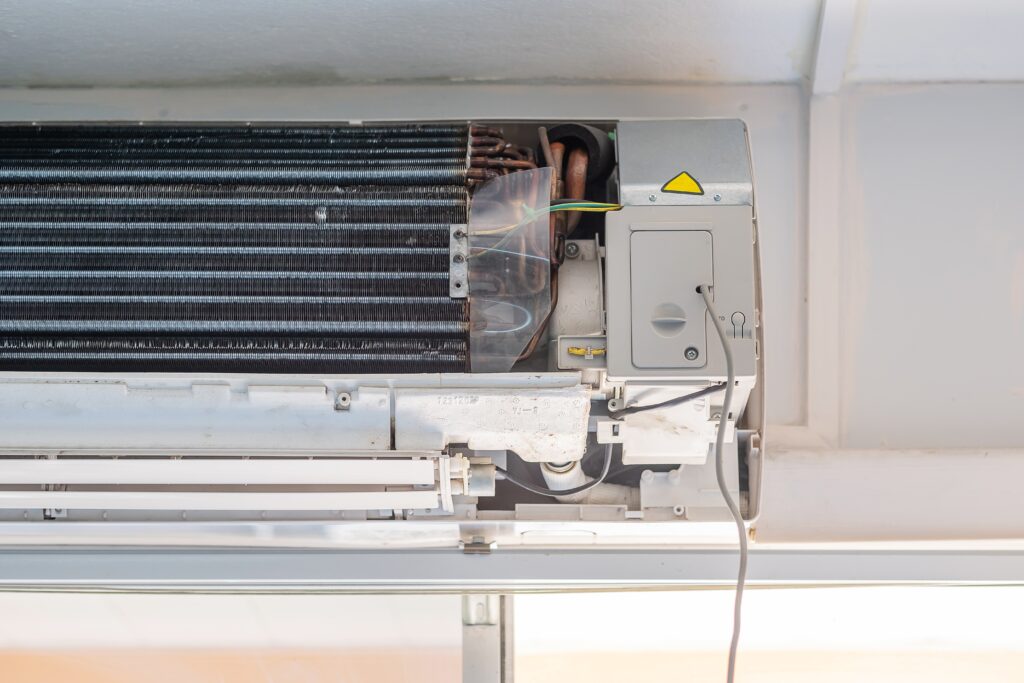
Ice on the copper lines or evaporator coil is a classic symptom that something is wrong with your AC. When refrigerant levels are low, the pressure inside the coil drops below normal, causing the coil temperature to fall below freezing. Moisture in the air then freezes onto the coil instead of draining away as condensation. This frozen barrier blocks airflow and reduces cooling capacity even further. The longer the ice stays, the more strain it puts on the rest of the system.
Ice buildup does not always mean low refrigerant, however. A dirty air filter restricts airflow across the coil, which causes the same freezing effect even when refrigerant levels are correct. A failing blower motor produces similar results because it cannot push enough warm air across the coil to keep it above freezing. Closed or blocked supply vents throughout the house also contribute to airflow problems that lead to ice. These airflow issues fall under the full repair category rather than a simple refrigerant top-up.
If you see ice, turn the system off and let it thaw completely before running it again. Running a frozen unit damages the compressor and can crack the coil itself. Once thawed, check the air filter and make sure all vents are open. If the ice returns, you need a professional diagnosis to determine whether the cause is refrigerant-related or a deeper mechanical issue. A trained technician measures static pressure, temperature splits, and refrigerant charge to identify the true problem.
Strange Noises Signs Your AC Needs Refrigerant or a Full Repair
Unusual sounds coming from your AC unit often signal that a full repair is needed rather than just a refrigerant adjustment. Hissing or bubbling noises from the refrigerant lines may indicate a leak, which crosses over into refrigerant territory. Grinding, screeching, or clanking sounds, on the other hand, almost always point to mechanical failure. These noises usually come from worn bearings, loose components, or a struggling compressor. Each sound tells a different story about what is happening inside the unit.
A buzzing noise from the outdoor unit often points to a failing capacitor or contactor. The capacitor stores the electrical charge needed to start the compressor and fan motors, and when it weakens, the unit struggles to start. A loud hum without the fan spinning is a clear sign the capacitor needs replacement. This is a full repair situation that has nothing to do with refrigerant levels. Ignoring it leads to compressor damage, which is one of the most expensive failures in any AC system.
Rattling sounds usually mean loose hardware, debris in the fan blades, or panels that need to be tightened. While these issues sound minor, they can lead to bigger problems if left alone. A loose fan blade can strike the housing and bend, throwing the entire unit out of balance. Refrigerant leaks rarely produce dramatic noises, so loud sounds almost always mean a mechanical repair is needed. A professional inspection identifies the source quickly and prevents further damage to surrounding components.
Diagnostic Steps to Tell if Your AC Needs Refrigerant or a Full Repair
Proper diagnosis is the only way to know if your AC needs refrigerant or a full repair. Guessing leads to wasted money and often makes the problem worse. HVAC technicians follow a structured process that checks airflow, electrical components, refrigerant pressure, and mechanical parts in a specific order. This methodical approach rules out simple issues before moving on to complex ones. Understanding what a technician does during a service call helps you ask the right questions and avoid unnecessary repairs.
Pressure Testing Steps to Tell if Your AC Needs Refrigerant or a Full Repair
Pressure testing is the foundation of any refrigerant-related diagnosis. A technician connects a manifold gauge set to the service ports on your outdoor unit to measure both high-side and low-side pressures. These readings reveal whether the system is undercharged, overcharged, or operating at the correct level. Low pressure on both sides usually points to a refrigerant leak somewhere in the system. High pressure can indicate overcharging, a dirty condenser, or a failing compressor.
Pressure readings alone do not tell the full story, which is why technicians also measure superheat and subcooling. Superheat measures the temperature of the refrigerant vapor leaving the evaporator, while subcooling measures the liquid refrigerant leaving the condenser. These numbers must match the manufacturer’s specifications for the system to operate correctly. If superheat is too high, the system is undercharged or has a restriction. If subcooling is too low, a leak is the most likely cause.
A proper pressure test also includes a leak detection step before any refrigerant is added. Adding refrigerant to a leaking system is never the right solution, since the new refrigerant will escape just like the old. Technicians use electronic leak detectors, ultraviolet dye, or nitrogen pressure tests to find the exact location of the leak. Once the leak is repaired, the system is evacuated with a vacuum pump and recharged to factory specifications. Skipping any of these steps results in repeat failures and wasted refrigerant.
Electrical Testing Steps to Tell if Your AC Needs Refrigerant or a Full Repair
Electrical testing rules out the components that often mimic refrigerant problems. A multimeter checks voltage, resistance, and capacitance across capacitors, contactors, and motors. A weak capacitor reads below its rated microfarad value and cannot deliver enough power to start the compressor or fan motor. This issue causes warm air, hard starts, and humming noises that homeowners often mistake for refrigerant trouble. Replacing a failing capacitor is a quick repair that restores normal operation.
Contactor testing is equally important during the diagnostic process. The contactor is the switch that sends power to the compressor and outdoor fan motor when the thermostat calls for cooling. Pitted, burned, or stuck contactors prevent the unit from starting or cause it to short-cycle. A technician inspects the contacts, measures voltage drop, and verifies that the coil pulls in correctly. Replacing a worn contactor is far cheaper than replacing a compressor that failed because of electrical issues.
Motor testing covers the blower motor, condenser fan motor, and compressor itself. Each motor has a specific resistance value across its windings, and readings outside the acceptable range indicate failure. A grounded or shorted motor must be replaced rather than repaired. Compressor testing also includes checking the start and run windings, since a failed winding means the entire compressor needs replacement. These electrical tests confirm whether your AC needs a full repair or if refrigerant service is the right path forward.
Airflow Testing Steps to Tell if Your AC Needs Refrigerant or a Full Repair
Airflow testing reveals problems that often look like refrigerant issues but are actually mechanical or maintenance-related. Technicians measure static pressure across the air handler to see if the system is moving the correct volume of air. High static pressure points to clogged filters, dirty coils, or restricted ductwork. Low airflow causes the evaporator coil to freeze, which mimics the symptoms of low refrigerant. Correcting airflow issues often restores cooling without any refrigerant work at all.
Temperature split testing is another critical step in the airflow diagnosis. A technician measures the temperature of the air entering the return vent and the air leaving the supply vent. A healthy system produces a temperature split of about 16 to 22 degrees Fahrenheit. A smaller split suggests low refrigerant, dirty coils, or airflow restrictions. A larger split usually means airflow is too low, which points to blower motor problems or duct issues.
Duct inspection rounds out the airflow testing process. Leaky ducts, disconnected sections, and crushed flex duct all reduce the amount of cool air reaching your living spaces. A blower door test or duct pressure test identifies these problems quickly. Repairing duct issues often solves cooling complaints that homeowners initially blamed on refrigerant. Want to schedule a complete cooling system check before the heat peaks? Click here to learn more about our air ducts service.
Why You Need a Professional to Tell if Your AC Needs Refrigerant or a Full Repair
Calling a licensed HVAC professional is the only reliable way to know if your AC needs refrigerant or a full repair. DIY refrigerant kits and online tutorials cannot replace the training, tools, and EPA certification required for proper diagnosis. A professional protects your investment by identifying the true cause of the problem on the first visit. This approach saves money, prevents repeat failures, and extends the life of your system. Trusting the job to a qualified technician also keeps your warranty intact and your home safe.
Safety Reasons You Need a Pro to Tell if Your AC Needs Refrigerant or a Full Repair
Refrigerant handling requires EPA Section 608 certification by federal law. Working with refrigerant without certification is illegal and dangerous, since the chemicals can cause frostbite, suffocation, and serious injury. Licensed technicians know how to recover, recycle, and recharge refrigerant safely. They also follow strict protocols to prevent leaks into the atmosphere. Homeowners who attempt these repairs face fines and serious health risks.
Electrical work inside an AC unit poses its own set of dangers. Capacitors store dangerous voltage even after the power is shut off, and improper handling causes severe shock or burns. Trained technicians discharge capacitors safely before testing or replacing them. They also use insulated tools, lockout-tagout procedures, and personal protective equipment. These safety practices protect both the technician and your home from accidents.
A professional also spots safety issues that go beyond the immediate repair. Faulty wiring, undersized breakers, and damaged disconnects all create fire hazards that need correction. Refrigerant leaks near gas appliances or electrical components require careful handling to prevent dangerous reactions. A complete diagnostic visit catches these problems before they cause harm. Hiring a licensed pro is the safest path forward for any AC concern.

Cost Reasons You Need a Pro to Tell if Your AC Needs Refrigerant or a Full Repair
A professional diagnosis saves money by identifying the real problem on the first visit. Adding refrigerant to a leaking system wastes the cost of the refrigerant itself, since it will escape again within weeks. Replacing parts based on guesswork leads to unnecessary expenses that pile up quickly. A trained technician uses proper test equipment to confirm the diagnosis before any parts are purchased. This approach keeps repair costs predictable and avoids surprise charges later.
Catching problems early also prevents expensive secondary damage. A small refrigerant leak that goes untreated leads to compressor failure, which can cost more than the rest of the system combined. Low airflow caused by a dirty coil eventually damages the blower motor and the evaporator. Each of these failures costs far more than the original repair would have. Professional service interrupts this chain of damage before it spreads.
Maintenance plans and seasonal tune-ups offer the best long-term value for AC owners. Regular inspections catch worn parts, low refrigerant, and airflow issues before they cause breakdowns. A well-maintained system also runs more efficiently, which lowers your monthly utility bills. The combined savings from fewer repairs and lower energy use add up quickly over the life of the unit. Investing in professional service pays off year after year.
Why Choose DC Electrical HVAC Plumbing for Your AC Refrigerant or Full Repair
DC Electrical HVAC Plumbing serves Lawrence, KS and the surrounding communities with honest diagnostics and no sales pressure. Our team holds EPA certification and OSHA 80 credentials, which means we follow every safety and environmental standard required by law. We arrive on time, explain your options clearly, and recommend only the work your system actually needs. Free estimates on service and installation make it easy to plan your repair budget. Financing options are also available for larger jobs.
Our 24/7 emergency service means you never have to wait through a hot Kansas night with a broken AC. We answer calls around the clock and dispatch technicians as quickly as possible. Every truck is stocked with the parts and tools needed to handle most repairs in a single visit. We stand behind our work with clear warranties and straightforward pricing. Customers across Douglas, Jefferson, Leavenworth, and Johnson counties trust us for reliable cooling service.
DC Electrical HVAC Plumbing is dedicated to providing stellar service on every call. Our technicians treat your home with respect, clean up after every job, and answer your questions in plain language. We believe homeowners deserve clear information and fair prices, not pushy sales tactics. Call (785) 596-3963 or email info@justcalldc.com to schedule your AC diagnostic today. We look forward to keeping your home cool and comfortable all summer long.